
Renting in the Netherlands
Understand the process before you apply.

A succesful rental search starts with understanding what you are looking for, which requirements apply and what you need to check before commiting.
Use this overview to prepare your search, compare properties and ask useful questions along the way.
From your first search to the keys
01
Set a realistic budget
Decide what you can comfortably spend each month before using rental filters. Allow for bills and everyday living costs, rather than treating the advertised rent as your complete housing budget.
Check each property’s income requirements separately. Landlords and agents may assess income differently, including how they treat a partner’s salary, a new employment contract or self-employed income.
Meeting the stated requirements does not guarantee selection, but checking them first helps you focus your applications.
02
Prepare your application
Requirements vary, but you may be asked for an employment contract, recent payslips or an employer’s statement. If you have not started your Dutch job yet, ask which alternative evidence the agent accepts.
Prepare a short introduction covering who will live in the property, your employment situation and your intended moving date.
Share sensitive documents only through a verified process. Before providing an ID copy, check why it is needed and which details are necessary.
03
Choose where to search
Housing platforms can help you discover properties across different providers. Local agencies may also advertise through their own websites.
Check what a platform subscription actually includes, whether it renews automatically and how to cancel. Access to listings or the ability to send a message does not mean a property has been reserved.
If you want someone to support your search, ask a relocation provider which tasks are included, what the service costs and what happens if no suitable property is found.
04
Check before you sign
Confirm the agreed rent, additional charges, deposit, start date and contract terms in writing.
Ask what type of tenancy agreement you are being offered, how notice works and which responsibilities belong to you. Have unclear wording explained before signing, particularly if the agreement is in Dutch.
Look beyond the advertised rent
Understand your monthly costs and
what you will need before moving in.
01
Basic rent
The amount paid for the accommodation itself, often called kale huur. Check whether the advertised price is basic rent or includes additional charges.
02
Service costs
Charges for specified services, such as cleaning communal areas. Ask for a breakdown and how the costs are accounted for
03
Utilities and other bills
Check whether electricity, gas or heating, water and internet are included, paid as an advance or arranged separately. Also allow for any applicable local charges.
04
One-off move-in costs
Budget separately for the deposit, moving, furnishings and any overlap between homes. These affect how much money you need at the start, even though they are not recurring monthly rent.
Know what comes with the home
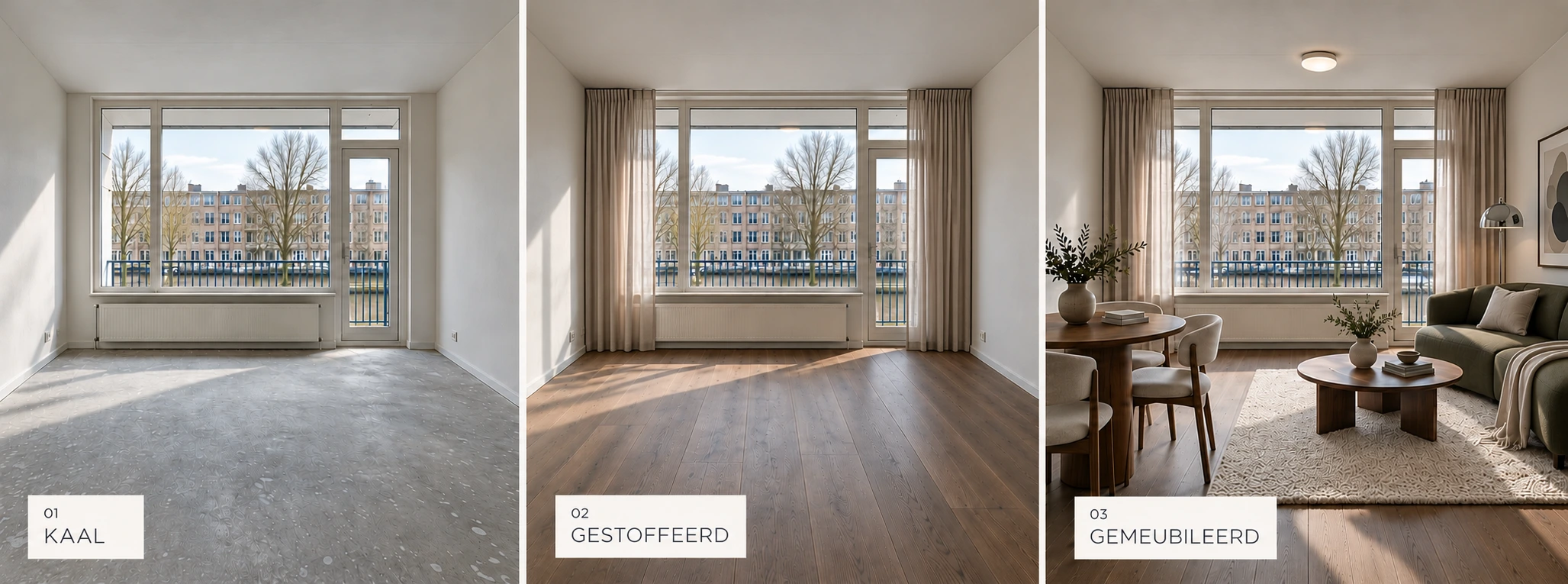
Shell – Kaal
A property with little or no furnishing. Finished flooring and curtains may need to be arranged. Confirm the condition in which the home will be handed over before estimating your setup costs.
Semi-furnished – Gestoffeerd
Flooring is often included, while curtains, lighting and appliances can vary. Do not assume furniture or a washing machine will remain simply becase they appear in the photographs.
Furnished – Gemeubileerd
Furniture is included, but the inventory differs between homes. Bedding, towels, crockery and cooking equipment may still be your responsibility.